
 Powder Bed Fusion
SLS 3D Printing Services
SLS Prototyping & Production
Morin 3D is Canada's go-to SLS 3D printing service. Rush next day one-offs to bulk orders. SLS delivers exceptional mechanical properties with complete design freedom—perfect for functional prototypes, end-use components, and complex geometries.
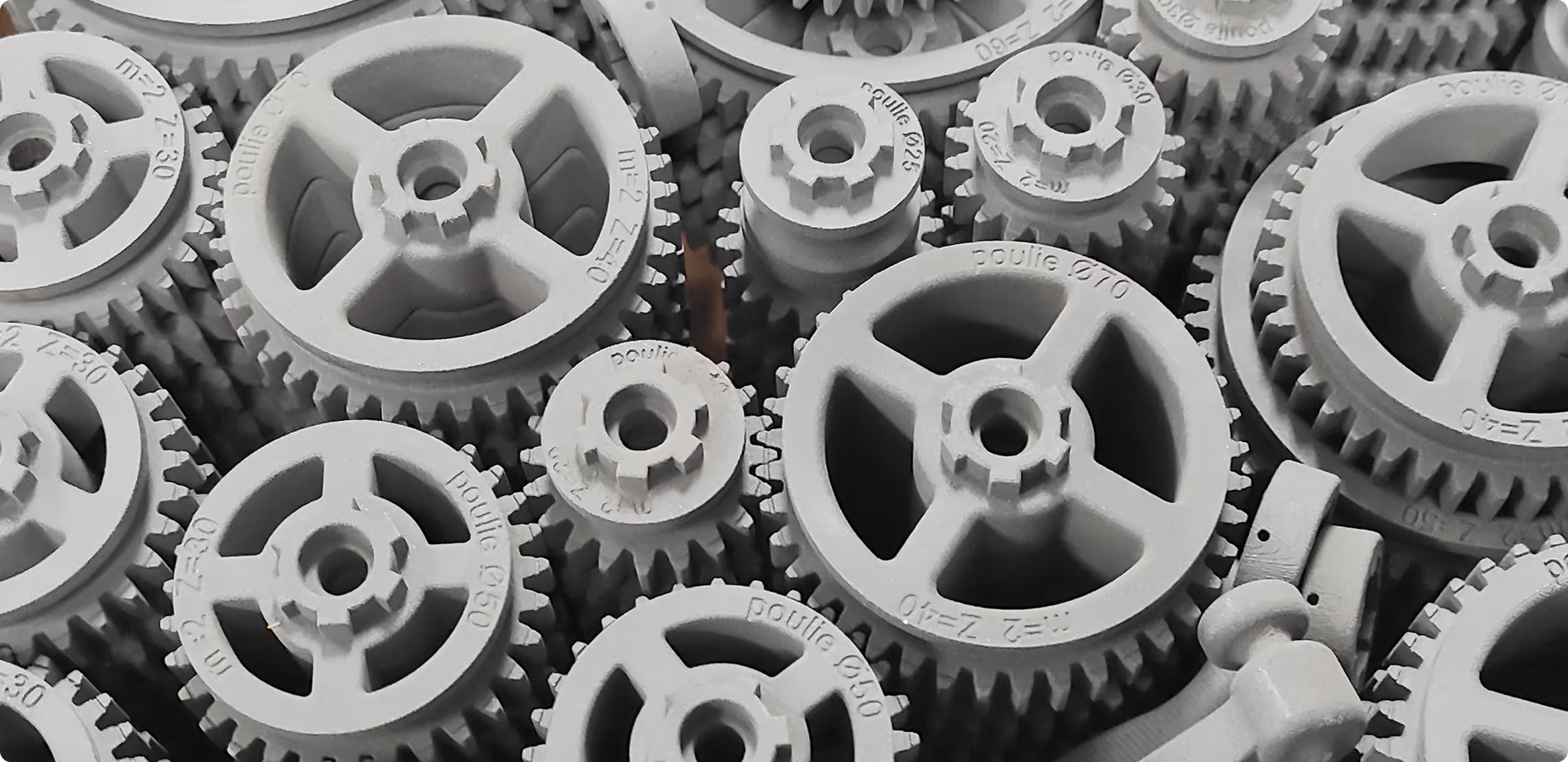
How SLS 3D Printing Works
SLS printing (Selective Laser Sintering) uses a high-powered laser to selectively fuse nylon powder particles layer by layer. Because unfused powder supports overhangs during printing, SLS requires no support structures—enabling truly complex geometries.
This support-free process makes SLS ideal for rapid prototyping, interlocking assemblies, internal channels, lattice structures, and parts that would be impossible with other technologies. The resulting nylon parts have excellent mechanical properties, chemical resistance, and consistent performance across all orientations.
Key Advantages
- No Supports Needed: Print complex internal features and interlocking parts
- Exceptional Strength: Mechanical properties approaching injection-molded nylon
- Isotropic Properties: Consistent strength in all directions, unlike FDM
- Design Freedom: Living hinges, snap-fits, and enclosed volumes
- Batch Efficiency: Cost-effective for low-to-medium production runs
File Check & Nesting
We optimize part orientation and nest multiple parts in the build volume for efficiency.
Laser Sintering
A high-powered laser selectively fuses nylon powder layer by layer.
Cooling
Parts cool gradually in the powder bed to prevent warping (12–24 hours).
Depowdering & Finish
Excess powder is removed and parts are finished to spec, either by hand or with media blasting.
SLS Materials
Engineering-grade nylon powders with exceptional mechanical properties. Each material is optimized for specific performance requirements.
Nylon 12 (PA12)
Most PopularThe industry standard for SLS. Excellent balance of strength, flexibility, and chemical resistance. Biocompatible to USP Class VI standards.
TPU 90A (Coming Soon)
FlexibleBiocompatible, skin-safe, and flexible. Ideal for gaskets, wearable prototypes, orthotics, and soft-touch components.
SLS Design Guidelines
Optimize your designs for SLS manufacturing. The support-free process enables geometries impossible with other technologies.
Download Full SLS Design Guide (Formlabs)Build Volume
160×160×295mm
Parts are nested in the build volume. Multiple parts can be printed simultaneously for batch efficiency.
Tolerance
±0.3mm or ±0.5%
Whichever is greater. Large flat pieces may have more variation.
Layer Height
0.1mm
Minimum Wall Thickness
0.6mm
Thicker walls provide significantly better strength.
Minimum Hole Diameter
1mm diameter
Through holes must also allow for line-of-sight clearance to ensure all material is cleared during post-processing.
Surface Finish
Fine matte texture
Uniform, slightly grainy texture.
What SLS Printing Is Best For
Complex Geometries
Internal channels, lattice structures, and interlocking assemblies that can't be made with other processes.
Prototyping & Production Parts
Functional prototypes and production components with injection-molded-like properties. No tooling costs for low-to-medium volumes.
Living Hinges & Snap-Fits
Functional hinges, clips, and snap-together assemblies that flex without breaking.
Aerospace & Automotive
Lightweight, high-strength components for aircraft interiors, UAVs, and automotive applications.
Medical & Prosthetics
Biocompatible components, prosthetic sockets, surgical guides, and patient-specific devices.
Medical & dental capabilities →Ducts & Housings
Air ducts, cable management, enclosures, and protective housings with excellent chemical resistance.
Need durable nylon for orthotics, prosthetics, or medical fixtures? See our Medical & Dental 3D Printing capabilities.
SLS Post-Processing
Standard depowdering is included. Bead blasting is available as an add-on.
Standard (Depowdered)
Default finish after powder removal. Parts are cleaned of excess powder and ready for use or further finishing.
IncludedBead Blasting
Glass bead blasting creates a clean, slightly shiny surface. Excellent for removing surface powder residue and providing a smooth, consistent finish.
IncludedSLS 3D Printing Questions
How does SLS compare to FDM and SLA?
SLS produces durable nylon parts with excellent
design freedom, and strength that’s close to uniform in all
axes.
FDM is more cost-effective and
great for larger parts, but often shows layer lines and has more
directional strength.
SLA delivers the highest detail and smoothest
surfaces, but many resins are less impact-resistant than nylon.
Choose SLS for functional end-use parts, snap-fits, and complex
geometries.
Why does SLS take longer than FDM?
SLS printing parts need gradual cooling in the powder bed (12–24 hours) to prevent warping. This cooldown plus powder removal adds time compared to FDM. However, SLS printing can batch many parts in a single build, often making it more efficient for multiple-part orders.
Are SLS parts as strong as injection-molded?
Often, they can be comparable for many PA12 nylon applications—especially for prototypes and low-volume production. Mechanical properties depend on material grade, part geometry, and process settings; SLS strength is typically more uniform than FDM, but it isn’t perfectly identical to injection molding in every direction or finish. SLS is commonly used when tooling isn’t justified or when you need complex geometry without supports.
What factors affect SLS printing cost?
Cost depends on the part’s size/volume (and how efficiently it can be nested in the build), material choice, and finishing options. Because SLS can batch many parts in a single build, ordering multiple parts often improves the per-part price. We provide transparent pricing upfront.
Can SLS parts be watertight?
Standard SLS parts are slightly porous, which is a characteristic of the powder bed fusion process. The material itself has good chemical resistance, and parts with walls thicker than 3mm are watertight. For applications requiring complete air tightness, or pressurized water tighness, post-processing/sealing is recommended.
What's the maximum part size for SLS?
Our build volume is 160×160×295mm. Larger parts can be printed in sections and bonded together. For oversized parts, we work with partner facilities offering larger SLS systems.
What is SLS printing used for?
SLS printing is used for functional prototyping and production parts across many industries. It's ideal for creating durable nylon components that need injection-molded-like strength without tooling costs. Common applications include rapid prototyping for product development, end-use parts for low-to-medium volume production, complex geometries with internal features, living hinges and snap-fits, aerospace and automotive components, medical devices, and industrial enclosures. The support-free process makes it perfect when you need complete design freedom or geometries impossible with other 3D printing technologies.
How much does SLS printing cost in Canada?
SLS printing cost in Canada varies based on part size, material choice, quantity, and finishing options. At Morin 3D, we offer transparent pricing with our instant quote system—simply upload your 3D file to get an accurate price in seconds. Because SLS can efficiently batch multiple parts in a single build, ordering several parts together often reduces the per-part cost. We serve customers across Canada from our Victoria, BC facility with competitive pricing and no minimum order quantities.
Ready for SLS Prototyping or Production?
Upload your file and get tough, support-free nylon parts. Production-ready strength with complete design freedom.